Puget Sound Fly Fishing
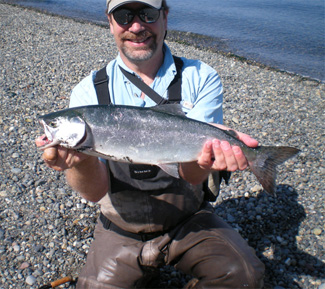
Pink salmon from Lincoln Park
Puget Sound offers a year-round fishery for the fly fisher. There are a few down-times but for the most part you can go out almost any day of the year and catch something. My fly fishing of the sound is mostly limited to salmonoids - sea-run cutthroat trout and the five species of Pacific Salmon that are either resident or return to the sound each fall.
My Favorite Puget Sound Flies
Epoxy Streamer Series
Looking for a streamer pattern that was easier to throw than a Clousers and easier to tie than a full on SeaHabit Bucktail, I came up with these flies which have become my favorites. On its first outing the Herring landed about eight resident Coho in an hour one December morning at the Narrows. The Sandlance has become my go-to fly about 80% of the time in local salt. These flies have even worked in Southern California and Baja. The epoxy adds some time to the fly but if you tie up a dozen then do all the epoxy at once it isn't so bad. They cast like a charm since they weigh nothing and seem to catch fish as well as the Clousers that were always my standard. Since they don't have much weight on them I throw an intermediate tip when using them.
Epoxy Sandlance
This fly was featured in the Fall 2006 issue of Northwest Fly Fishing magazine.
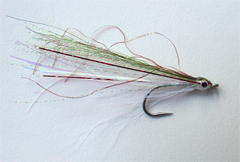
Thread: Mono
Eyes: 1.5mm Pearl stick-on eyes
Tail: 12-15 strands of Pearl Flashabou
Body: Flat Pearl Diamond Braid, wound all the way to the hook eye
Wing: A layer of Pearl Flashabou tied it on top, extending to the end of the tail. Follow with a light layer of white bucktail on top and a few strands of white bucktail on the bottom of the body. Top with a layer of Olive Krystal Flash, a few strands of Dark Green FishHair and 4strands of M.O.P. Rootbeer Gliss-N-Glow. On the side add one strand of Red Flashabou to each side. Tie in all toppings to the eye so they show through as the top of the head.
Head: Epoxy the head with 5-minute expoxy. Let dry, apply eyes, and then add one more thin coat of epoxy.
Epoxy Herring
At times they just want to eat a herring. I've found this to be a bit more effective in the winter months at times.
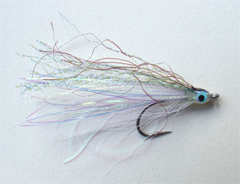
Thread: Mono
Eyes: 2.0mm Pearl stick-on eyes
Tail: 12-15 strands of Pearl Flashabou with a small amount of white bucktail.
Body: Flat Pearl Diamond Braid, wound all the way to the hook eye
Wing: A layer of Pearl Flashabou tied it on top, extending to the end of the tail. Follow with a light layer of white bucktail on top and a few strands of white bucktail on the bottom of the body. Then layer on the sides 10-12 strands of Mother of Pearl Gliss-N-Glow. Top with a layer of Herring Back Krystal Flash and 6 strands of M.O.P. Rootbeer Gliss-N-Glow. Tie in all toppings to the eye so they show through as the top of the head.
Head: Epoxy the head with 5-minute expoxy. Let dry, apply eyes, and then add one more thin coat of epoxy.
Epoxy Chum Fry
This became one of my favorites in the early season when the Chum fry and heading out of the rivers back into Puget Sound.
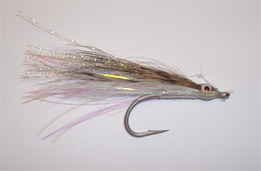
Thread: Mono
Eyes: 2.0mm Pearl stick-on eyes
Tail: 12-15 strands of Pearl Flashabou with a small amount of white bucktail.
Body: Flat Pearl Diamond Braid, wound all the way to the hook eye
Wing: A thin layer of white bucktail tied it on top, extending to the end of the tail. Then a sparse layer of olive Krstal Flash topped wit grey squirrel tail. Tie in all toppings to the eye so they show through as the top of the head.
Head: Epoxy the head with 5-minute expoxy. Let dry, apply eyes, and then add one more thin coat of epoxy.
The Salmon Thing
At Lincoln Park in the height of the pink run I was tossing a standard fly and noticed everyone around was throwing these big pink/orange things on gear and catching the heck out of fish. I had a SoCal beach fly in my box that had similar colors and it worked. I went home that night and created The Salmon Thing which is basically a fly version of the plugs that the gear guys throw. This fly brought a lot of pink salmon to the beach.
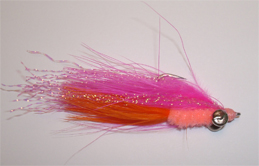
Thread: Pink
Eyes: Large lead or lead-substitute dumbbell eyes
Tail: Bright orange maribou
Body: Shrimp pink chenille
Wing: Magenta maribou topped with pink Krystal Flash
Clouser's Minnows
These originally were my favorite flies until I got tired of the lead eyes twisting and falling off after getting beat up on the beach. Now I use the expoxy flies much more but will occasionally go back to a Clouser.
Searun Clouser's Minnow
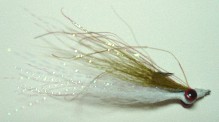
Thread: White
Eyes: Red Lead Eyes (XS for #8, S for #6-4)
Tail: White bucktail
Wing: Pearl Krystal Flash, Olive Bucktail, topped with Root Beer Gliss-N-Glow.
Maribou Searun Clouser's Minnow
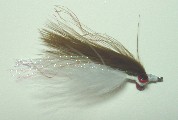
Thread: White
Eyes: Red Lead Eyes (XS for #8, S for #6-4)
Tail: White Maribou
Wing: Pearl Krystal Flash, Olive Maribou, topped with Root Beer Gliss-N-Glow. Optionally add a few strands of red maribou to both sides, it seems to help.
Searun Jiggy
I got into Popovic flies for saltwater fishing and started creating the jiggy version of my basic fly because I kept breaking off the lead eyes on the beach behind me. I thought the jiggy would cause less damaged flies. The only issue I've found with it is that if you tick your backcast the hook itself will break instead of the eyes breaking off. You need to coat the head and eyes with 5-minute Epoxy to finish the fly.
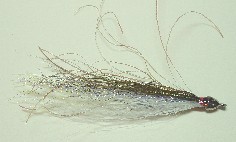
Thread: Clear Monofilament
Head: Tungsten Cone Head
Eyes: Red stick-on eyes
Wing: White Bucktail, Pearl Krystal Flash, Olive Bucktail and Root Beer Gliss-N-Glow
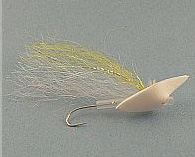
Titanic Cutt Slider
One from my friend Jay Paulson at Amazing Flies. The Titanic series, unlike the ship, is unsinkable and cutthroat and coho love the v-wake that the hull of the Titanic Cutt Slider makes.
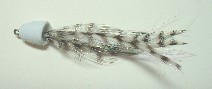
Miyawaki Beach Popper
This one came from Leland Miyawaki, one of the people responsible for getting me out on the beaches fishing. For details on it's tying and how to fish it check out http://www.pugetsoundflyfishing.com/FlyPatterns/Attractors/BeachPopper_MiyawakiL.htm. I caught my first, and one of my largest, cutthroat on this fly. If I'm tired of tossing lead I'll go to it for a change of pace.
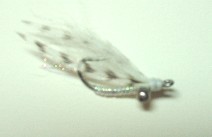
White Crazy Charlie
Yes, a bonefish fly is also a pretty good salmon fly at least in the winter when the resident coho are keyed on eating shrimp. Use a #6-8, toss it out on a floating or intermediate line and retrieve it very slowly.
Where to Fish
I mostly fish the South and Mid-Sound areas since they are closest to home.
South Sound Beaches
- The Narrows Park, AKA Doc's - usually good year round
- Titlow Park - in Tacoma, can be good in the winter for coho
- Kopachuck State Park - can be good at times or totally dead
- Purdy - love it on the ebb when the current is flowing from the back bay
Mid-Sound Beaches
- Lincoln Park - great in the fall when big-boys are running, a very urban fishing experience and you share the beach with a lot of gear guys.
- Carkeek Park - in Seattle, great point that you'll share with a little bit of everything
- Golden Gardens Park - also in Seattle, even more urban than Carkeek
- Picnic Point County Park - one of my favorite short-day spots
Kayak Spots
- Vaughn Bay - this bay is always good as is the area just out of it. Decent launch site.
- Kayak Point County Park - good launch, some decent fishing within the park but better a few points to the south
- Horsehead Bay - good launch on Car Inlet with access to Kopachuck and Green Point
- Wauna - another good launch at the end of Carr Inlet with access to Purdy and Minter Creek areas
Gear
Once I discovered switch rods I'll never go back. I use a Sage 6110-4 Z-Axis rod for 100% of my beach fishing and revert to a one-handed RPLXi 690 or 790 when fishing from my kayak. With the switch rod I can spey cast or overhand cast, or mix the two in order to get maximum distance. I typically throw a Rio 7-weight quad-tip line on the switch rod and do well with it since it spey casts about 50-60' and shoots well to get the extra distance. I use the clear intermediate tip 90% of the time and go to a floating tip if there are fish obviously on top. I use a 7' 2X leader most of the time and go down to 3x when fishing smaller shrimp patterns.
Sea Kayak Fishing
I also fish from my sea kayak some and have found a few things that make that easier. First off is a deck-bag that doubles as a tackle carrier and a way to hold my fly rod down. I have a Seal-Line bag that has a crossed bungee on the top. I stick my fly box, leaders, line tips, etc... in the bag and use the bungee to strap down my rod at the reel. The bow of my boat has a handle that fortunately flops over the side and holds the tip of the rod very well. I haven't had any problems with this rig but haven't capsized with it yet either, I'm not 100% sure that I'd still have my rod after a capsize.
I also have a long-handled landing net that is built for canoes or float tubes that I strap to the rear deck. I have a long bungee on it to keep from loosing it overboard. This makes it much easier to land fish than a regular net or no net at all. The first time I tried landing a Coho from my kayak I had no net and had to scoop him up onto the spray skirt which wasn't too easy. After that I went looking for a decent net.